Why Is My Washing Machine Not Spinning? Causes & Fixes
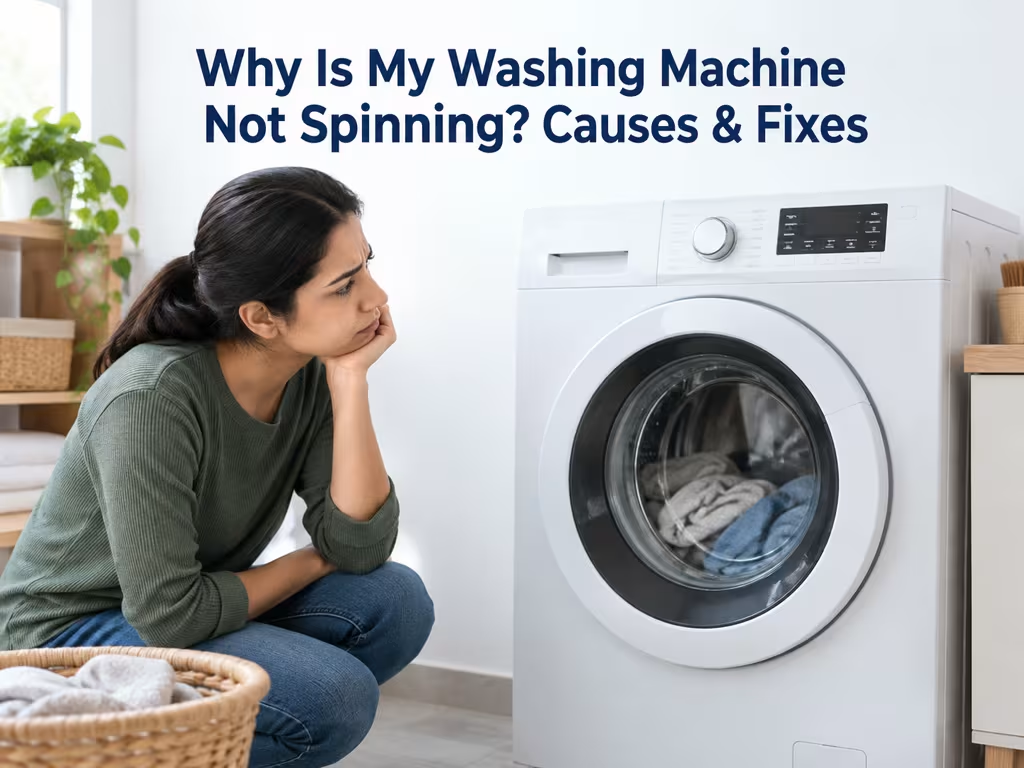
Your washing machine fills with water, washes your clothes, and then stops before the spin cycle. You open the door and find clothes soaked with water. Several problems can cause this, from an unbalanced load or blocked drain to a faulty belt, motor, or door lock.
The most common causes include an unbalanced load, overloaded drum, drainage problem, blocked filter, door lock fault, damaged belt, motor issue, or excessive vibration.
If your washing machine has stopped working during other parts of the cycle as well, see our why your washing machine is not working guide to check other common problems.
Common Causes of a Washing Machine Not Spinning
You do not always need a technician for a no-spin problem. Start with the simple checks below. If the problem remains, the machine needs a proper inspection.
1. The load is unbalanced
An uneven load is one of the most common reasons for a washing machine to stop spinning.
Heavy clothes often move to one side of the drum. Towels, blankets, bedsheets, and jackets are common examples. The machine detects excessive movement and reduces or stops the spin cycle.
Try this:
- Remove a few items if the drum is full.
- Spread the clothes evenly around the drum.
- Avoid washing one heavy item by itself.
- Run the spin cycle again.
For example, washing one large blanket alone often creates an uneven load. Adding a few smaller items helps distribute the weight.
2. The machine is overloaded
Your washing machine has a fixed load capacity. A 7 kg machine is designed for around 7 kg of dry laundry under suitable washing conditions.
Stuffing the drum with clothes leaves little room for movement. The motor also has to handle more weight during spinning.
Check the capacity label on your machine. If clothes are tightly packed inside the drum, remove some items and run another cycle.
3. Water is not draining
A washing machine needs to remove the water before high-speed spinning. If water remains inside the drum, the machine often stops the spin cycle.
Check for these signs:
- Water remains inside the drum.
- Clothes are dripping wet.
- The machine takes longer to drain.
- A drain error appears on the display.
Check the drain hose for bends or blockage. Make sure the hose is positioned correctly according to the manufacturer's instructions.
4. The drain filter is blocked
Small objects often enter the drain system during washing. Coins, hair, lint, buttons, and pieces of fabric are common examples.
A blocked filter restricts water flow. The machine then struggles to drain and often skips the spin cycle.
If your model has an accessible drain filter, switch off and unplug the machine before cleaning it. Keep a shallow container and towel nearby because water might come out when you open the filter.
Clean away visible debris and reinstall the filter securely.
5. The door lock is not working
Front-load washing machines use a door-lock system during operation. The machine checks the lock before starting high-speed spinning.
A damaged door lock, sensor, or wiring connection prevents the machine from starting the spin cycle.
Check whether the door closes firmly. Look for an error code related to the door or lock.
Do not bypass or disable the safety lock. It is designed to prevent the door from opening while the drum is spinning.
6. The drive belt is damaged
Many washing machines use a drive belt to transfer motor power to the drum. A worn, loose, or broken belt affects drum movement.
You might notice:
- The motor makes a sound but the drum does not rotate.
- The drum rotates slowly.
- The machine makes unusual noises.
- You notice a rubber smell.
A damaged belt needs replacement. Belt inspection often requires access to internal parts, so arrange professional service if you are not trained to work inside appliances.
7. The motor has a fault
The motor provides the power needed to rotate the drum. A motor problem often affects the spin cycle.
You might hear a humming sound without normal drum movement. The machine might also stop after washing and display an error.
Switch off the machine if you hear unusual electrical sounds or notice a burning smell. Repeated operation might worsen the fault.
A technician should test the motor, wiring, and related components before replacing parts.
8. The washing machine is not level
A washing machine needs a stable and level surface. If it sits unevenly, the drum might shake during high-speed spinning.
The machine detects excessive vibration and reduces or stops the spin cycle.
Check your machine by gently pushing it from different sides. If it rocks, adjust the leveling feet according to the manufacturer's instructions.
Also check whether the floor is firm and stable.
9. The control board has a fault
The control board manages different washing functions. It controls processes such as water intake, drainage, motor operation, and spin speed.
A control board problem might cause the machine to stop before spinning or behave differently from one cycle to another.
Look for repeated error codes or several functions failing during the same wash.
Do not replace the control board based on symptoms alone. A technician should test the related components first.
Quick Troubleshooting Guide
| Problem | Possible Cause | What You Should Check |
|---|---|---|
| Drum does not spin | Unbalanced or overloaded load | Redistribute clothes and remove excess laundry |
| Water remains inside | Drain blockage | Check the drain hose and filter |
| Motor runs but drum does not move | Drive belt problem | Arrange a belt inspection |
| Machine stops before spinning | Door lock or drainage problem | Check the door and error code |
| Machine shakes heavily | Machine is not level | Adjust the leveling feet |
If your washing machine still does not spin after checking the load, drainage, filter, and door, the problem might involve an internal component. In this situation, you may need professional washing machine repair in Lucknow to identify the faulty part and fix the problem.
What should you check first?
Follow this order before booking a repair:
- Remove excess clothes from the drum.
- Redistribute the laundry evenly.
- Check whether water remains inside.
- Inspect the drain hose.
- Clean the drain filter if your model has one.
- Check the door or lid.
- Make sure the machine stands level.
- Run a separate spin cycle.
If the machine still does not spin, note any error code shown on the display.
When should you call a washing machine technician?
Arrange professional service if basic checks do not solve the problem. You should also seek repair when the machine makes grinding or electrical sounds, smells like burning rubber, repeatedly shows an error, leaks water, or fails to rotate the drum.
Do not open electrical components while the washing machine is connected to power. Unplug the appliance before carrying out basic cleaning or external checks.
A washing machine that does not spin often starts with a simple issue such as an unbalanced load, excess laundry, or restricted drainage. Check these areas first. If the problem continues, the belt, motor, pump, door lock, wiring, or control system needs proper testing. If you are in Lucknow, SP Home Appliance Service Center provides washing machine repair service in Lucknow for these problems.